
Nanobanana Pro is Google's image generation and image editing model. This comprehensive guide explains how to prompt Nanobanana Pro correctly to achieve maximum visual fidelity, consistency, and control, especially for product images.
Tip #1: Reference Images (CRITICAL)
Nanobanana Pro supports up to approximately 15 reference images. Always provide the maximum number of relevant reference images when possible.
Best Practice
Always provide the maximum number of relevant reference images to maximize visual accuracy and consistency.
Best practices for reference images:
- Use as many reference images as possible when relevant
- Explicitly reference each image inside the prompt (e.g., "image 1", "image 2")
- Use descriptive names like "the reference image of the bottle" or "the reference image of the label"
- The more explicit and well-named the references are, the higher the visual accuracy will be
Tip #2: Prompting Mindset (LLM, not Midjourney)
Nanobanana must be used as a multimodal LLM that understands and reasons, not like Midjourney. Do not use short, artistic, Midjourney-style prompts.
Instead, follow these guidelines:
- Prompt Nanobanana as if you were talking to Gemini 3
- Assume the model reasons internally
- Give clear, structured, and logical instructions
- Provide detailed context and specifications
Tip #3: Prompt in JSON (Highly Recommended)
Always prompt Nanobanana Pro using JSON, with as much relevant detail as possible.
Benefits of JSON prompting:
- Clear structure for the model
- Less ambiguity
- Better consistency
- Easier to add detailed constraints without losing clarity
You should explicitly define:
- Image style (iPhone, UGC, Instagram, DSLR, etc.)
- Background (blurred or not)
- Product vs face priority
- Technical constraints (orientation, ratio, sharpness)
Known Issue: Mirrored Products / Reversed Text
Nanobanana may sometimes generate mirrored products, reversed or flipped text, or inverted logos. This is one of the most common issues to watch out for.
Prevention Strategy
To prevent mirrored products, explicitly state the constraint in the main prompt AND repeat it in the negative_prompt section at the bottom of the JSON.
Complete Prompt Example: Graza Olive Oil
Here is a production-ready prompt for generating a UGC-style product image with Graza olive oil:
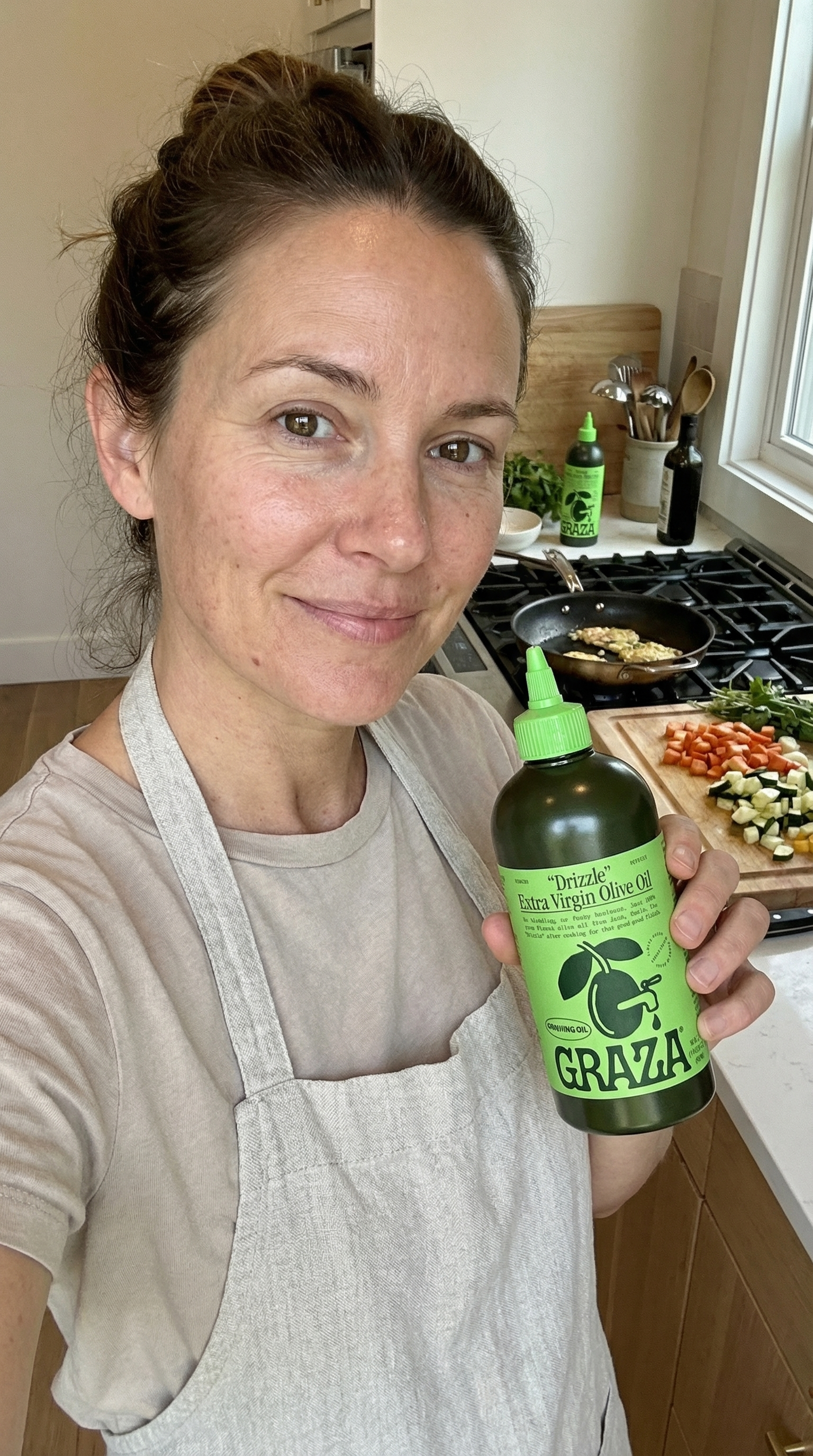
Graza Prompt Example
{
  "subject": {
    "demographics": "Adult woman ~45 years old, warm and modern vibe, natural and realistic skin",
    "hair": "Brown / chestnut hair tied back (loose bun or low ponytail), a few natural loose strands",
    "face": "Authentic skin with subtle imperfections (visible pores, fine lines, micro-imperfections), healthy complexion, minimal makeup",
    "expression": "Soft smile, she is looking directly at the camera (iPhone lens), friendly and welcoming expression",
    "clothing": "Simple and elegant kitchen outfit: neutral t-shirt + light-colored apron (linen/cotton), no logos"
  },
  "product": {
    "type": "Squeeze bottle of olive oil (drizzle bottle)",
    "reference_instruction": "The product must be IDENTICAL to the reference image: same bottle shape, same green cap, same green label, same typography and illustrations, same proportions. Do not modify the design and do not invent any elements.",
    "size": "Squeeze bottle approximately 20–25 cm tall and 6–7 cm in diameter (hand-sized), realistic scale in hand",
    "label_orientation_critical": "IMPORTANT: the label must be correctly oriented and fully readable (not inverted, not mirrored), facing the camera"
  },
  "pose": {
    "scenario": "iPhone POV selfie (no mirror): she is holding the phone at arm's length using the front camera",
    "camera_hand": "Right or left hand holding the iPhone (visible or not), natural selfie angle slightly above eye level",
    "product_hand": "Other hand holding the bottle in the foreground near the face, label facing the camera, not covering the face",
    "body_position": "Upper body facing the camera, slight 3/4 angle to reveal the kitchen background",
    "action_hint": "She is cooking: behind her, a pan or pot on the stove, cutting board and ingredients visible"
  },
  "environment": {
    "location": "Modern, aesthetically pleasing kitchen (light wood, stone, neutral backsplash), warm atmosphere",
    "background_story": "Countertop with vegetables and herbs, utensils visible, pan on the stove, active cooking scene, tidy but lived-in",
    "branding": "No other visible brand logos in the environment"
  },
  "camera": {
    "device_style": "iPhone / smartphone photo, Instagram UGC look",
    "shot_type": "Vertical portrait, framing from chest to top of head, product in the foreground",
    "lens_equivalent": "Smartphone front camera equivalent 24–26mm, subtle realistic selfie distortion",
    "focus_depth": "Natural smartphone rendering: no artificial bokeh, scene mostly sharp; priority on face and label readability",
    "composition": "Product emphasized, label readable, active kitchen clearly visible in the background"
  },
  "lighting": {
    "type": "Natural window light + soft indoor lighting",
    "direction": "Soft side light on the face, realistic reflections on the bottle",
    "mood": "Warm, bright, authentic"
  },
  "style_and_realism": {
    "aesthetic": "Ultra-realistic, authentic Instagram selfie style",
    "rendering": "No painterly or 3D effect, no plastic skin, no heavy retouching",
    "authenticity_details": "Visible micro-imperfections, apron wrinkles, countertop texture details"
  },
  "quality_and_technical_details": {
    "resolution": "4K",
    "sharpness": "Sharp on face and product; background remains readable",
    "noise": "Subtle, realistic smartphone grain"
  },
  "aspect_ratio_and_output": {
    "ratio": "4:5",
    "orientation": "Vertical portrait",
    "framing": "Instagram-ready: face and product in the foreground, kitchen in the background"
  },
  "negative_prompt": [
    "mirror selfie",
    "reflection",
    "mirrored text",
    "reversed letters",
    "inverted label",
    "unreadable label",
    "artificial bokeh",
    "excessive blur",
    "modified packaging",
    "invented colors",
    "other visible brands",
    "deformed hands",
    "extra fingers",
    "distorted face",
    "plastic skin",
    "over-retouched beauty",
    "cartoon",
    "anime",
    "3d render",
    "watermark",
    "signature",
    "low resolution",
    "nudity",
    "sexual pose"
  ]
}
Complete Prompt Example: Goli Supplements
Here is a production-ready prompt for generating a premium UGC-style product image with Goli supplements:
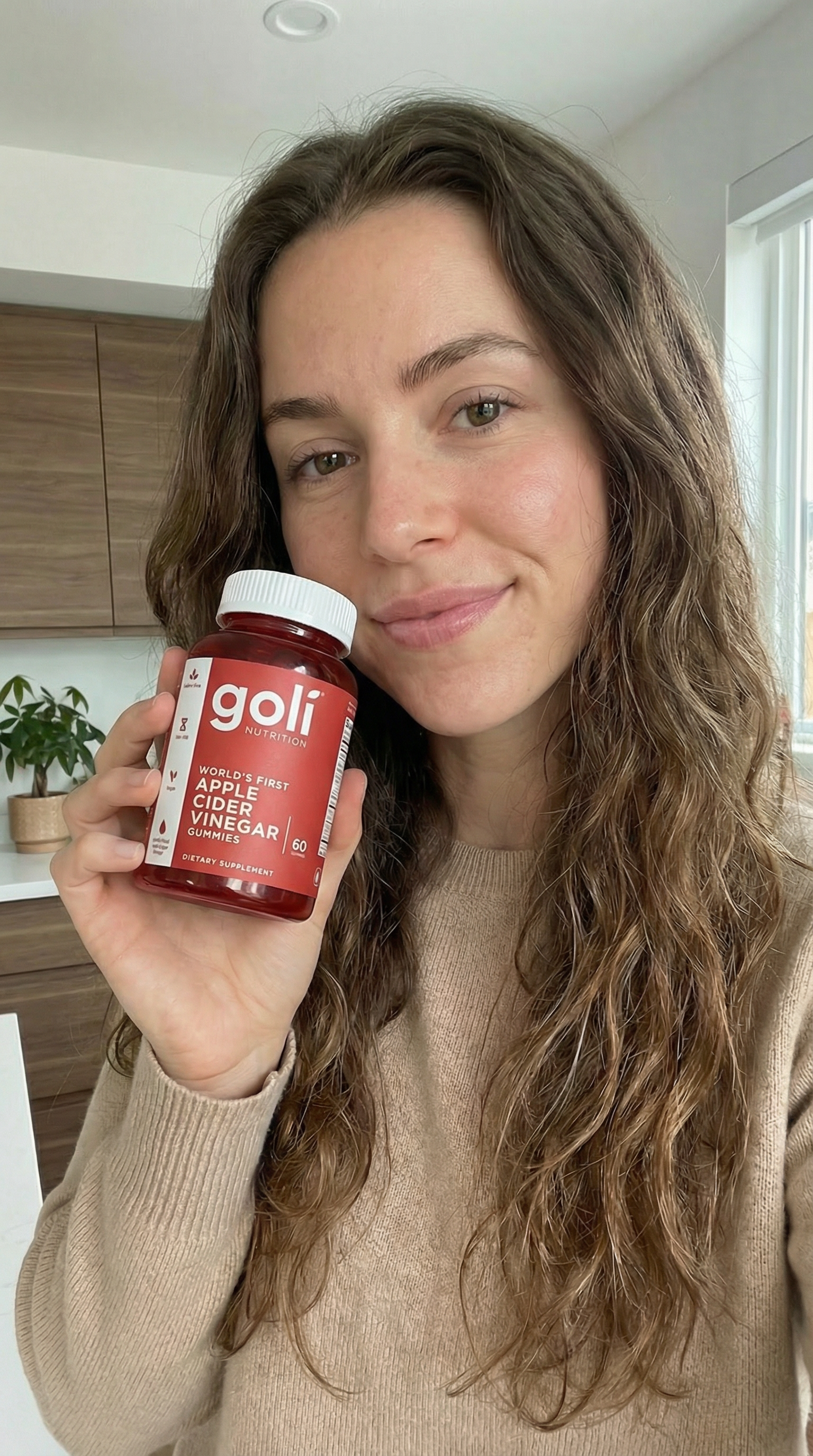
Goli Prompt Example
{
  "subject": {
    "demographics": "Adult woman (25–30 years old), natural appearance, realistic skin texture (pores, micro-reflections), no excessive retouching",
    "hair": "Brunette with long dark brown to brown hair, slightly wavy, middle or slight side part",
    "style": "Casual lifestyle outfit (neutral top, light sweater or simple shirt), no visible logos",
    "makeup": "Light, realistic makeup (natural complexion, subtle mascara, natural lips)",
    "expression": "Soft, authentic smile, looking at the camera (UGC / influencer vibe)"
  },
  "product": {
    "brand": "Goli",
    "reference_instruction": "The product must be EXACTLY the same as the provided Goli reference image: container shape, colors, typography, logo, label, cap, material, reflections, proportions, and all visual details. Do not alter the brand identity and do not invent colors.",
    "label_orientation_critical": "VERY IMPORTANT: the label text and logo must be readable and correctly oriented (not mirrored, not inverted). The final image must NOT be horizontally flipped.",
    "size": "Gummies or supplements container approximately 12–14 cm tall and 6–7 cm in diameter, hand-sized format"
  },
  "pose": {
    "body_position": "Lifestyle portrait, upper body and head visible",
    "hands": "One hand holding the Goli bottle near the face (cheek or chin level), label facing the camera",
    "composition_emphasis": "The product is in the foreground while the face remains clearly visible; natural and relaxed posture"
  },
  "environment": {
    "location": "Modern kitchen or bright living space, warm and inviting atmosphere",
    "background": "Slightly blurred background (furniture, plants, countertop), no distracting elements, no other visible brands"
  },
  "camera": {
    "shot_type": "UGC close-up portrait",
    "angle": "Eye-level or slightly above, natural selfie perspective",
    "lens": "Smartphone camera look, 26mm equivalent (consistent UGC rendering)",
    "focus": "Sharp focus on eyes AND product label (text readability is the top priority), moderate depth of field"
  },
  "lighting": {
    "type": "Soft natural window light with subtle fill",
    "direction": "Soft lateral key light, gentle shadows under the chin and around the bottle",
    "highlights": "Realistic reflections on the bottle, no overexposure"
  },
  "style_and_realism": {
    "aesthetic": "Ultra-realistic photography, premium UGC / influencer style",
    "rendering": "Natural photorealism, no painterly or 3D effects, no plastic skin",
    "detail_level": "Very high fidelity on the label (typography, edges, micro-scratches, reflections), detailed skin and hair"
  },
  "quality_and_technical_details": {
    "resolution": "4K",
    "sharpness": "Very sharp on eyes and label; background slightly blurred",
    "noise": "Subtle, realistic sensor texture; no aggressive smoothing"
  },
  "aspect_ratio_and_output": {
    "ratio": "4:5",
    "orientation": "Vertical portrait",
    "framing": "Goli product in the foreground, label perfectly facing the camera and readable, no mirror inversion"
  },
  "negative_prompt": [
    "mirror",
    "mirrored",
    "mirror selfie",
    "flipped image",
    "inverted text",
    "reversed text",
    "backward letters",
    "mirrored logo",
    "modified packaging",
    "invented colors",
    "changed label",
    "fake logo",
    "watermark",
    "signature",
    "artifacts",
    "deformed hands",
    "extra fingers",
    "plastic skin",
    "over-airbrushed face",
    "distorted face",
    "blurred product",
    "unreadable label",
    "cartoon",
    "anime",
    "3d render",
    "illustration",
    "painting",
    "minor",
    "child",
    "nudity",
    "sexual pose"
  ]
}
Key Takeaways
- Always use reference images (up to 15) and explicitly reference them in your prompt
- Prompt Nanobanana as an LLM (like Gemini 3), not like Midjourney
- Use JSON format for structured, detailed prompts
- Explicitly prevent mirrored products by specifying text orientation in both the main prompt and negative_prompt
- Define all technical constraints: style, background, focus, orientation, ratio, sharpness
- Be extremely specific about product positioning and label readability
Final Recommendation
Invest time in crafting detailed JSON prompts with explicit constraints. The 10-15 minutes you spend structuring your prompt can prevent multiple failed generations and ensure brand-accurate, professional-quality results on the first try.